

Great Product Marketing: 20 Startup Website Examples
- Apr 22
- 11 min read
Updated: 3 days ago

To click, or not to click, that is the question?
To click through and consume the content which thou art has been written; to suffer through this calamity of long-winded propositions; these throes of product righteousness with its slings and arrows taking up arms against thy prospects; it is but an act of outrageous marketing misfortune.
No more into the brand breach, dear friends, no more.
The Original Startup COMMS & Marketing Principles in this Stupid Article:
The Little Corporal Principle
The Elephant in The Room Principle
The On-the-Nose When Nobody Knows Principle
The Brand, The Myth, The Legend Principle
The Everything Tastes Better with Butter Principle
The Rebel With a Cause Principle
The Internet Killed the Shopping Mall Principle
Keep reading for 20 great product marketing examples.
20 great product marketing examples from hot startups.
Jump to a product page
Telepath
Olipop
Created By Humans
Policygenius
Mercury
OSSO (vr)
Who gives a crap
Heura
tomboyx
Shortwave
Notpla
Givebutter
Seapoint
DASH Water
Fibr
Athletic Brewing Co.
mumumelon
&Open
Flashka
Stupid For Startups
1. Telepath

Sometimes, the best way to stay top of mind is by telling customers what they'll leave behind.
"Build machine learning powered applications without a data scientist," says Telepath.
Their marketing messaging is doing what I call "The Old World Versus The New World Principle." Telepath is contrasting their customer's pain with a shimmering vision of what new life could feel like.
If your audience is feeling melancholy about their current world, follow this example from Telepath and tell your buyers what they'll be happy to live "without."
2. Olipop

After 140 years of soda products that've turned your Uncle Frank's waistline into the immovable mass of Moby Dick. Olipop is applying "The New World Versus The Old World Principle."
But positioning their product against Big Soda is a grand ambition. As grand as Napoleon Bonaparte himself. Thus, I refer to this mighty mission strategy as "The Little Corporal Principle."
It states that "Any startup, no matter the size nor niche, should opt for the most ambitious vision as it relates to their product category—in a goal to be as broadly relevant as their product permits."
On the marketing messaging side, no word in Olipop's slogan, "New Kind of Soda™," exceeds four letters. You can call this a lesson in category self-awareness. For when it comes to universal offerings like soft drinks, only layman's speak will do.
3. Created by Humans

This is called "The On the Nose When Nobody Knows Principle."
Created by Humans is a first-mover founded to protect human creative rights against AI technology. "Our mission is to preserve human creativity and make it thrive in the AI era," says their manifesto.
And while something meaningful like this works great for an About page. The messaging preceding the click-through to get there, requires something easier to grasp.
This is where "The On the Nose When Nobody Knows Principle" comes in. It says that "Startup products marketing themselves in a newborn category that lack mainstream awareness, should sacrifice creativity for clarity.
"The AI Rights licensing platform for books," says Created by Humans. *Which also gives it that first-mover authority and market leader appeal.
*There's another principle which speaks to this kind of market leader COMMS. See #18 on this list.
4. Policygenius

Can you really build an entire marketing program around one adjective?
If you're like Policygenius, and you're positioning yourself against one of mankind's most maddening shopping journeys like buying insurance—the answer is "Yes."
"We make the process easy says," Policygenius.
This is an example of "The Old World Versus New World Principle." The goal of Policygenius is to become the progressive alternative in a very traditional product category.
Thus, they must find verbiage that directly contrasts their product against that Old World, that maddening marmalade we know as "buying a policy."
"Easy" is the best way to showcase the New World's wonders.
5. Mercury

I've spent too much time losing my soul in Corporate America to know that "banking" doesn't vibe like this. That's why creatively, we can label this a marketing masterpiece from Mercury.
As a fintech competing against corporate banks, their startup marketers are also applying "The New World Versus Old World Principle."
Except in addition to differentiating with words, "Radically different banking."
The visual design—the picturesque mountains, forests, and greenery is a breath of fresh air for their audience. Specifically, young entrepreneurs who have no interest in dealing with grey suits at some stuffy bank in Midtown Manhattan.
Remember this if your product is entering a traditional industry.
6. OSSO (vr)

From OSSO comes another example of "The On the Nose When Nobody Knows Principle."
Thanks to this VR upstart, we're moving into a wonderful world where nurses don't have to train in the line of fire.
In their product page example, OSSO understands that the marketplace is still catching up with their innovation. Therefore, by applying descriptive copywriting, their customers benefit from clarity rather than abstract creative.
DISCLAIMER: "Clarity over creativity" is a cliché that's been oversold. But if you're still in your early-stage marketing, it remains strategically sound. Just make sure you're working towards more emotional, universal creative concepts. As startup brands in their latter stages grow by reaching bigger, broader audiences through general messaging.
7. who gives a crap

As planet earth's favorite toilet paper startup (yes, toilet paper startup), Who Gives A Crap has won the Porcelain Cup.
They're playing the "What's the most memorable thing we can say right now?" game.
I call this example "The Everything Tastes Better With Butter Principle."
Since toilet paper is not a hard concept to understand, Who Gives A Crap doesn't have to explain itself with complex ingredients. Instead, they can skip the product features and layer on that butter baby.
That simple, emotional, universal, most memorable part of any brand, product, or creative ad concept.
"We're here to uncrap the world," says Who Gives A Crap.
8. Heura

Unlike Beyond Meat or Impossible Burger, whose food feels like it was created in some lab like the dinosaur babies in John Hammond's Jurassic Park. Heura has a human origin story behind their plant-based brand.
This is what I call the "The Elephant in the Room Principle."
It's defined by a startup's ability to answer the big question relevant to their category in a way that demystifies perception around their product.
"From the mediterranean to the whole world," as Heura puts it.
Founded by two men, Marc and Bernat, in Barcelona, Spain, the brand prides itself on bringing its mediterranean heritage—and all its real ingredients and flavor to their plant-based food.
By doubling-down on this differentiator, Heura's plant-based meals don't feel like that green jello Hammond's grandkids were spooning down at Isla Nublar.
(Jurassic Park reference... had to be there.)
9. tomboyx

This example from Tomboyx, a pioneer in gender inclusive underwear, is why I created The Original Principles of Startup COMMS & Marketing.℠
When marketing to a target audience as marginalized as the trans community, marketing is an exercise in individuality.
In the individual case of Tomboyx, earning individual trust comes less from proof of product. And more from understanding the hardships facing their individual consumer.
"How hard can it be to make good underwear?" asked Tomboyx founders. "And by that, we meant underwear that anybody could feel comfortable in, inclusive of all sizes and gender expressions."
In startup COMMS & marketing, no one size fits all. And when it comes to product acceptance, the Who We Are can be just as important as the product itself.
10. shortwave

Shortwave is positioning as a specialist in a world of AI generalists, such as ChatGPT. This is an example of use-case marketing.
When you avoid generic messaging about what problems your product solves. You become more relevant to your target audience.
"Search all receipts from the London trip and add them to my expense report," says Shortwave's prompt.
A successful use-case marketing strategy doesn't speak to everyone. In this case, Shortwave's email automation is targeting a senior leadership segment who doesn't want to waste time on admin.
11. Notpla

Notpla.
"LET'S F***ING GO," as Tom Brady would say, with his bionic face aging like Benjamin Button because of the fruits, nuts, and most probably one highly sought-after plastic surgeon in California.
And now, that we're talking plastic. Let's talk Notpla.
This sustainable packaging startup has invented a plastic-free alternative made from seaweed. And if one day, you find yourself in the plight of Notpla, where you're Good Will Hunting brilliant, have a billion-dollar breakthrough, and few competitors—you're afforded a luxury.
You can simply sell the category you created.
To do this successfully, Notpla uses "The It's the Economy Stupid Principle." You may have heard this term before. It's the phrase coined by Bill Clinton's Campaign Advisor when the President and his staff were struggling to stay on message during the 1992 Presidential Election.
The idea is that there's one simple message that should be hammered into the minds of an audience. Rather than three or four messages, that while, may communicate a concept more completely, only serves to dilute and distract from the most important message of all.
On this Notpla product page, there's one message communicated four different ways:
The edible bubble made from seaweed
What if packaging was so natural you could eat it?
The breakthrough solution that started it all
It began with a simple question, "how can we package liquid in a way that works in harmony with nature, rather than against it?"
Notpla understands that the most important thing the marketplace needs to know right now is that their startup company is the leader in a plastic-free innovation that'll change the world.
'It's the seaweed stupid.'
12. Givebutter

In any market where the consumer has too many choices, it's best to treat this like an episode of "ABC's The Bachelor."
To start, imagine yourself as a contestant competing for a rose.
After spending weeks in front of 3.5 million people chasing after a guy who lives on his sister's couch. And after watching your self-worth vaporize before your eyes like a children's school bus before a locomotive.
You've finally secured the "One-on-One."
It’s the dating card which grants you an exclusive one-on-one date with The Bachelor to convince him you're not crazy.
But startup marketer beware.
This one-on-one isn't a time to simply sell yourself. It's a time to expose the women in the other room for what they really are. A time to compare and contrast.
I like what Givebutter's doing here.
13. Seapoint

It's different, isn't it? It almost looks like a startup love letter written from founder to follower about the relationship to come.
Different is something that sounds easy until that one day you realize it isn't. Until that one manic moment, when you realize that your idea, which remains trapped inside the confines of your unconscious mind, demands a certain unshakeable something to wrangle it out.
"Unleashing Europe's potential," is Seapoint's unshakeable something.
With an embrace of Napoleonic ambition, Sean Mullaney and his financial pioneers are applying The Little Corporal Principle. In other words, positioning their mission to be as broadly relevant as their category permits.
"Glory is fleeting, but obscurity is forever," someone once said.
14. DASH Water

Ahh yes, in the days of our mothers and fathers that wonky peach with the wonky little wart would've found itself right in the bottom of the trash.
But thanks to DASH Water, you're looking at a misfit marketing star. As one of London's hottest sustainable beverage brands, their wonky water is applying one of my favorite concepts: "The Island of Misfit Toys Principle."
A principle that's been applied in two of Hollywood most beloved stories:
A math genius who works as an MIT janitor by day and solves impossible math problems by night: Good Will Hunting.
A red-nosed reindeer who's ousted from the reindeer games, but is the perfect guiding light for Santa's sleigh: Rudolph the Red-Nosed Reindeer.
It's true, don't you see? People love to root for the character that doesn't belong.
DASH Water's wonky mission is just more proof of that.
15. fibr
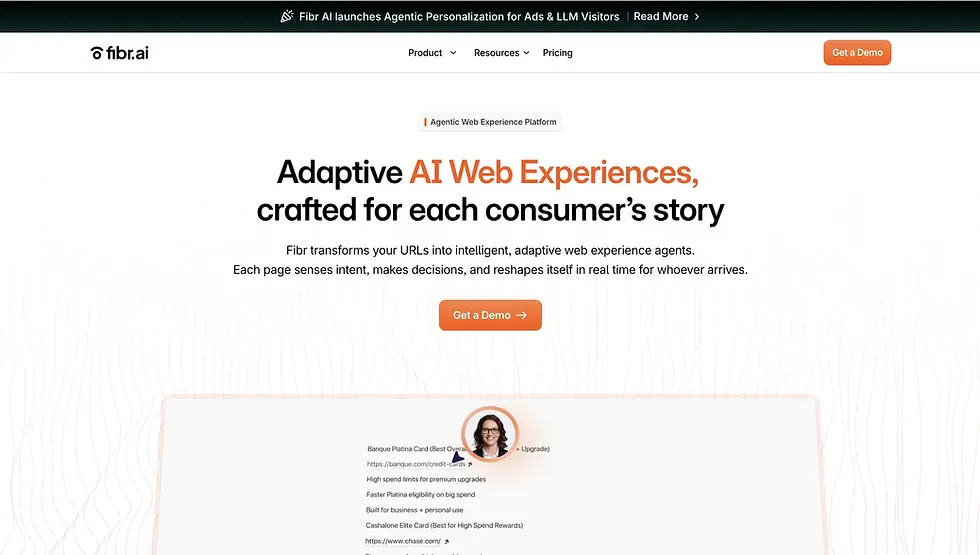
AI? I'll oblige this time. Only one Hallmark story per article (Stupid For Startups official regulations).
But you're in luck. Fibr AI is the perfect product page to talk about. They are an AI-powered marketing platform that get this.... "rewrites a website visitors experience in real time."
In other words, we spend all this time creating a few different landing page options for different segments of our audience—when Fibr can simply create them on a dime, in a way that only applies to that given individual, at that time. Wow.
But that makes this work from a marketing perspective: Fibr's ability to turn our perceptions about generic AI marketing's on its head.
16. Athletic Brewing Co.
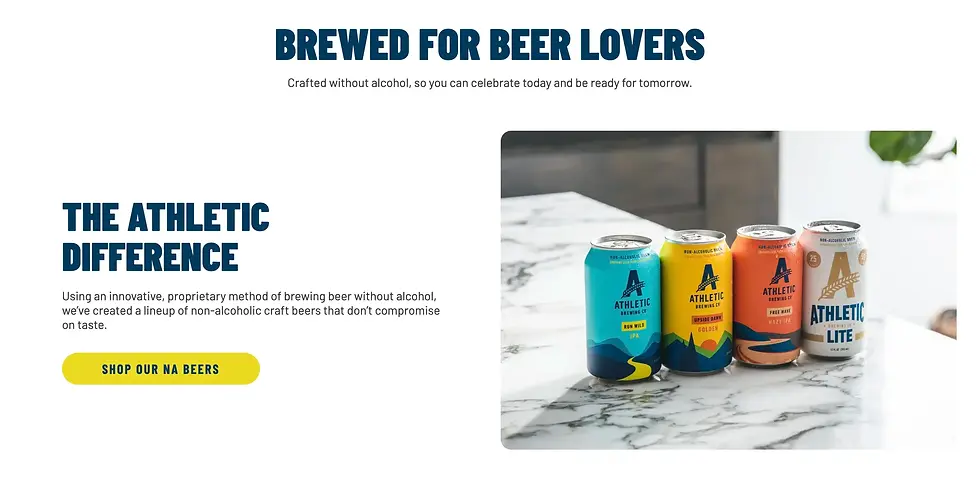
If you have a blind date, this is one NA beer you can drink if you're trying to pretend you're not an alcoholic. But she'll find that out when she takes you home to her parents next Christmas.
Athletic Brewing Co. was in some way, Christmas morning in this category. They were smart to realize nobody wanted to drink NA brews because they tasted like rusty cat piss that didn't even get you drunk.
If you're not gonna give people the 8am regrets, at least give them the flavor.
"Brewed for beers lovers," Athletic says.
They redefined a whole category by targeting the people who hated their product.
(Did.... I say they were smart?)
17. mumumelon

***** * ***** ************.
That first line is what I think about the typical lemonhead. I bleeped it out because I started talking to a therapist and were working on some sh*t.
But Mumumelon has taken Lululemon and flipped it on its head, riding the love and hate of a polarizing brand into the promised land of sustainable fast-fashion.
Is this for real? Is this a marketing stunt? Only time will tell.
But it's a great example of comparative advertising and how you should leverage the connotations of competitor brands. Especially, when you have an anti-Lululemon audience waiting on the other side.
18. &Open

"The Brand, The Myth, The Legend Principle" helps create a market leader aura around a brand.
This &Open example is a similar approach used by Created by Humans (#3), who needed complete clarity in a category lacking consumer understanding.
But this positioning strategy can fulfill another purpose. Especially for those startups, like &Open, who have first-mover product status or who want to double down on their product positioning for a specific niche.
"The global gifting platform for companies that care," says &Open
This principle may have been inspired by that college football team in Columbus, Ohio. But can't confirm.
19. flashka

Flashka has three headline versions interchanging on their website.
Generate quality flashcards in seconds
Highlight and understand your notes
Study in the most efficient way
An example of "The It's the Economy Stupid Principle, they're communicating the same message in three different ways: We help improve the way you study.
As far as who Flashka is speaking to, they're applying "The Internet Killed the Shopping Mall Principle." This means targeting micro-marketing audiences in your early-stage marketing instead of settling for general messaging.
Flashka, according to their Instagram and TikTok handles are positioning as the "UNIVERSITY STUDENT STUDY TOOL."
Forget about getting a foot through the door, just start with a toe. Then expand your marketing to the masses as you mature and grow.
20. Stupid For Startups

Like Owen Wilson's speech in Wedding Crashers after Rachel McAdams found out he was a degenerate who "crashed weddings to sleep with girls."
Sometimes you just need hit the reset button "and maybe take a walk... take a chance."
I'm not sure where this is going, but I do know this: If you just take a look around your industry, your peers, you'll find so many marketers doing the exact same thing every same day (kinda like that Hallmark wine bar in example 10).
But if you can give yourself permission to embarrass yourself and leave that groupthink behind. You may hear crickets around your content marketing for a bit (guilty)—but you can feel confident knowing that you've built something personally sustainable.
After all, no individual idea is realized overnight. They're half-baked in the morning.
In the meantime, in the high-pitched whisper of Mr. Wilson, 'Maybe take that walk... take that chance.'
How to make your startup's product page great?
Let's start by reviewing the principles in this article.
The 7 Original Principles of Startup COMMS & Marketing Stupid featured in article:
The Little Corporal Principle: Embracing a Napoleonic-like ambition, the startup mission is positioned to be as broadly relevant as the product permits.
The Elephant in The Room Principle: The marketing messaging answers the big or taboo question relevant to the category in way that demystifies perception surrounding the product.
The On-the-Nose When Nobody Knows Principle: Startup products coming into a young category lack mainstream awareness, and should therefore prioritize clarity over creativity.
The Brand, The Myth, The Legend Principle: First-movers or category leaders let prospects know they're number one. If not, they stake their claim as a 'fan favorite' or 'beloved brand' in the category.
The Everything Tastes Better with Butter Principle: Startups, especially those with established product awareness, double-down on emotional messaging concepts that appeal to bigger, broader audiences.
The Rebel With a Cause Principle: Category leaders position against the category status quo with anti-traditional branding that speaks to underserved audiences.
The Internet Killed the Shopping Mall Principle: In the early-stages, awareness grows by targeting micro-marketing audiences instead of generic messaging for general audiences.
Dear John, that's all she wrote.
- Charley

Don't hate my Stupid For Startup content?
Connect with me personally on — My LinkedIn.


